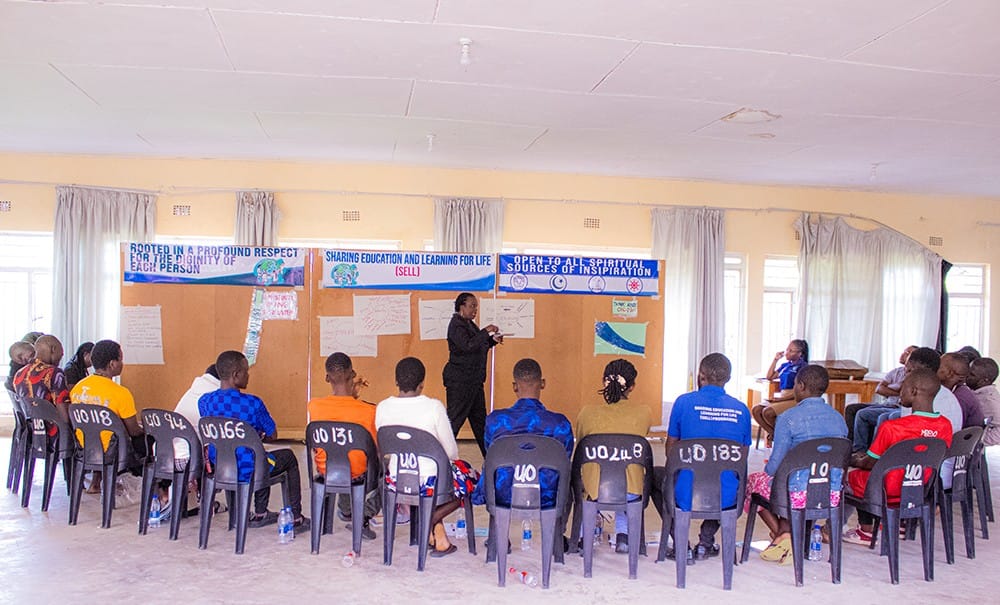
From 5–8 March 2026, Ungweru Organisation hosted a transformative training under the Sharing Education and Learning for Life (SELL) Programme, bringing together young adults from communities across the Central Zone to begin their journey as community facilitators. The four-day training gathered twelve committed young people who are expected to lead learning processes in their respective communities, promoting personal development, social responsibility, peacebuilding, and justice.
Facilitated by Isaac Thindwa, Patricia Nyirenda, and Taonga J. Gondwe, the training focused on the Self-Awareness Unit, a foundational component of the SELL methodology. The programme sought to equip participants with facilitation skills and personal development tools necessary to guide meaningful learning processes that promote social responsibility, peacebuilding, and justice.
The training adopted the SELL spiral methodology, an approach that emphasizes reflection, dialogue, action, and evaluation. Rather than relying on traditional lecture-based teaching, the facilitators encouraged participatory learning where each participant actively contributed to discussions and activities. This learning process enabled the trainees to reflect deeply on their life experiences and learn from one another in a supportive and respectful environment. One of the early sessions illustrated the difference between conventional classroom arrangements and the SELL semi-circle learning style. By sitting in a semi-circle, participants experienced a learning space where everyone’s voice mattered, promoting equality, openness, and confidence among the trainees. Through this experience, participants came to understand that learning can be a shared journey built on dialogue and mutual respect rather than a one-directional transfer of knowledge.
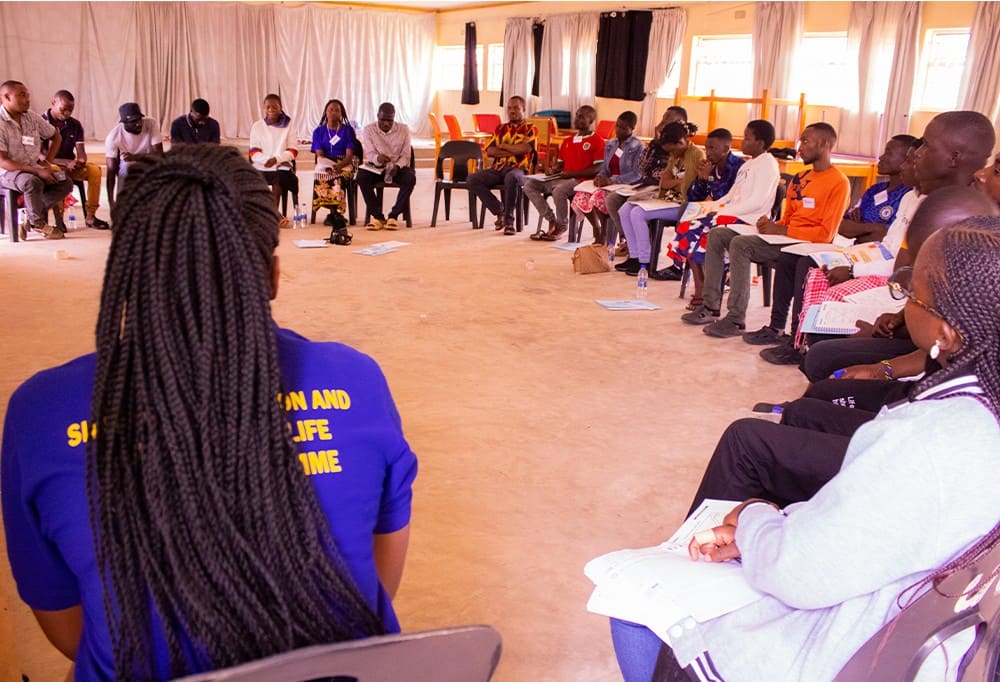
Participants together with facilitators seated in a semi-circle for an open discussion
Throughout the training, participants also explored the role of a facilitator and how it differs from that of a traditional teacher. They reflected on the importance of encouraging participation, creating safe learning spaces, listening attentively, and guiding discussions without dominating them. Emphasis was placed on the values required for effective facilitation, including respect for others, confidentiality, openness to diverse perspectives, responsibility, and commitment. These reflections helped participants appreciate that facilitation is fundamentally about serving the learning group and enabling others to discover knowledge and insight through their own experiences.
The training further introduced participants to the six units of the SELL Programme, which together form a framework for integrated human development. Using the symbol of an arrow, facilitators explained how the programme guides individuals to understand themselves, their relationships with others, and their responsibility within society. Two guiding messages of the programme “All Life is Interconnected” and “Think and Choose” were explored in depth, helping participants recognize how their choices and actions influence not only their own lives but also their families, communities, and the broader environment.
At the heart of the training was a deep exploration of self-awareness and personal growth. Participants engaged with reflective tools such as the Johari Window and Transactional Analysis, which helped them examine how they see themselves and how others perceive them. Through guided reflection and open sharing, the young adults explored their personal histories, strengths, and challenges, gaining deeper insight into how their life experiences shape their behaviour, communication patterns, and relationships. This process allowed participants to identify areas for personal growth while strengthening their confidence as emerging community leaders.
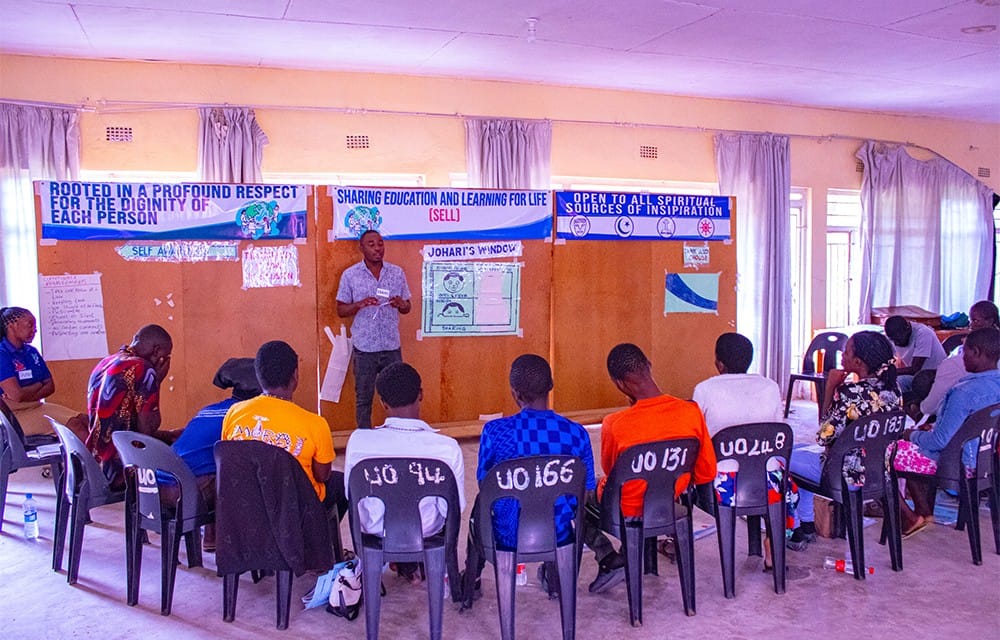
Participants explored self awareness and personal growth through Johari window and Transactional analysis session
Creative learning activities also formed an important part of the training. Working in small seminar groups, participants reflected on ideas drawn from the educational philosophy of Paulo Freire, whose approach to education emphasizes dialogue, critical thinking, and social transformation. The groups expressed their reflections through creative presentations such as drama, mime, song, and group storytelling. These activities helped build teamwork, creativity, and public speaking skills while encouraging participants to think critically about social issues and their potential role in addressing challenges within their communities.
The training was further enriched by the presence of distinguished guests who offered encouragement and inspiration to the participants. The young facilitators were honoured by a visit from Bishop John Ryan, who praised the commitment and enthusiasm shown by the participants. In his remarks, he encouraged the young facilitators to use the knowledge and skills gained from the training to serve their communities with dedication, reminding them that meaningful change often begins with individuals who are willing to lead with responsibility and compassion. He also acknowledged the important contribution of Fr. Leo Traynor in supporting and promoting the SELL Programme in Malawi.
“Use the Knowledge and skills you have gained this training to serve your communities with dedication. Remember, meaningful change often begins with individuals like you who are willing to lead with responsibility and compassion. I also acknowledge the important contribution of Leo Traynor in supporting and promoting SELL Programme in Malawi, and i encourage you to follow his inspiring example” Bishop John Ryan said.
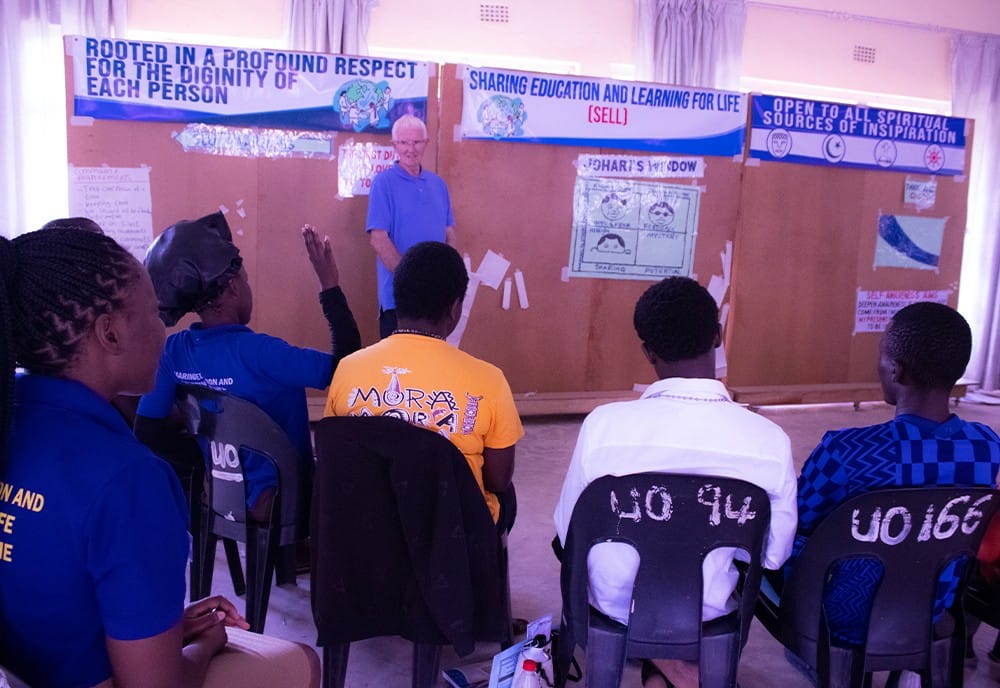
Bishop John Ryan addressed the volunteers
Further encouragement came from James Nkhoma, the Diocesan Youth Chaplain, who emphasized the importance of youth involvement in building strong and responsible communities. Addressing the participants, he noted that “young people have the energy and creativity needed to transform communities, and programmes like SELL help channel that potential into positive action.” He encouraged the trainees to take their role seriously and remain committed to guiding fellow youth toward constructive choices and responsible leadership.
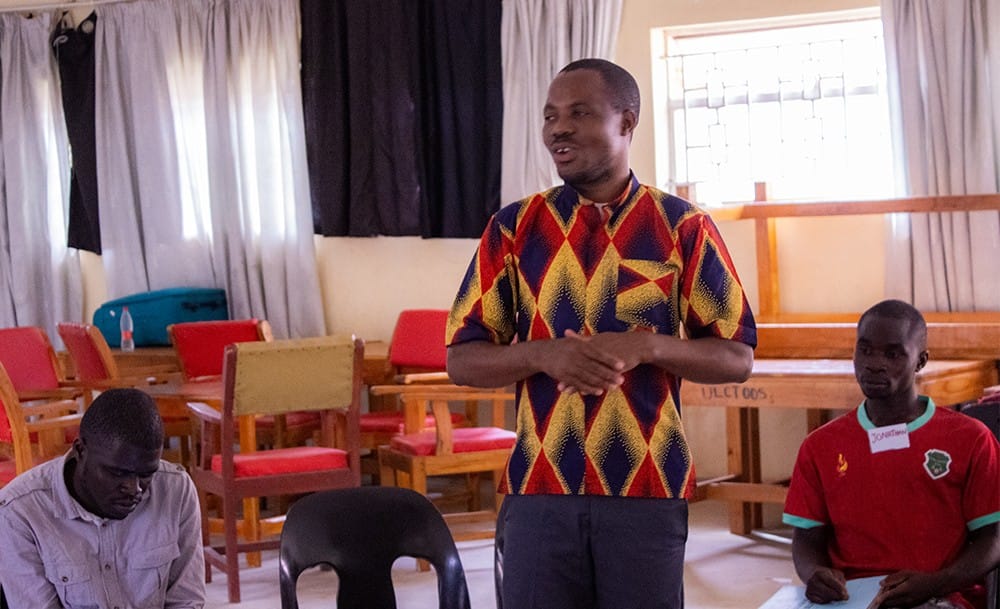
Mzuzu Diocese Youth Chaplain, James Nkhoma urged young people to channel their energy into responsible community leadership
The training also included a valuable health awareness session facilitated by Justina Mgemezulu from the District Health Office, who educated participants about cervical cancer prevention, the importance of early screening, and the need to raise health awareness within communities. The session reminded participants that community development also involves promoting health awareness and well-being among community members.
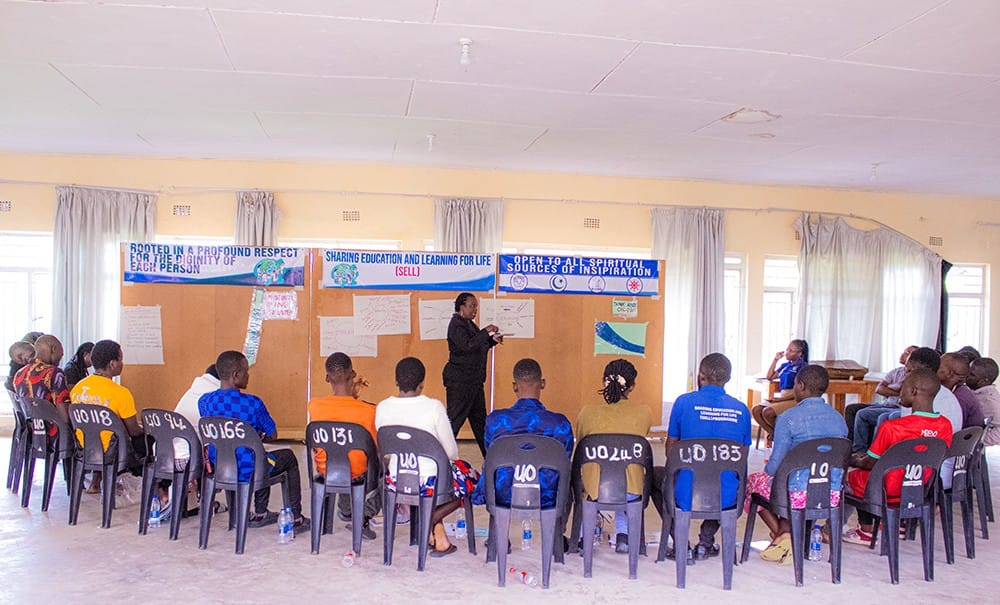
Justina Mgemezulu from the District Health Office led a health awareness session on cervical cancer prevention
During planning discussions, participants reflected on potential challenges they may encounter when facilitating workshops in their communities, including limited access to training materials, communication difficulties within community teams, scheduling challenges, and financial constraints. Through collaborative dialogue, they explored practical solutions such as strengthening communication among team members, planning activities in advance, and seeking guidance from the programme’s resource team when necessary.
The training concluded with a planning and commitment session in which each group developed schedules for practice sessions and upcoming community workshops. Participants received facilitation materials and expressed enthusiasm and readiness to begin their work as community facilitators and multipliers of knowledge. The programme ended with a reflective evaluation session and a closing prayer, after which participants departed for their communities with renewed motivation and a shared commitment to contribute to personal growth, community empowerment, and social transformation. Through initiatives such as the SELL Programme, Ungweru Organisation continues to invest in youth leadership and community learning, nurturing young people who are prepared to become catalysts for positive and sustainable change in their communities.
Brilliant to read all this. Thanks for lifting my spirit filling me with hope.
Leo